Wholesale Price China NBR O-Ring for Chile Factories
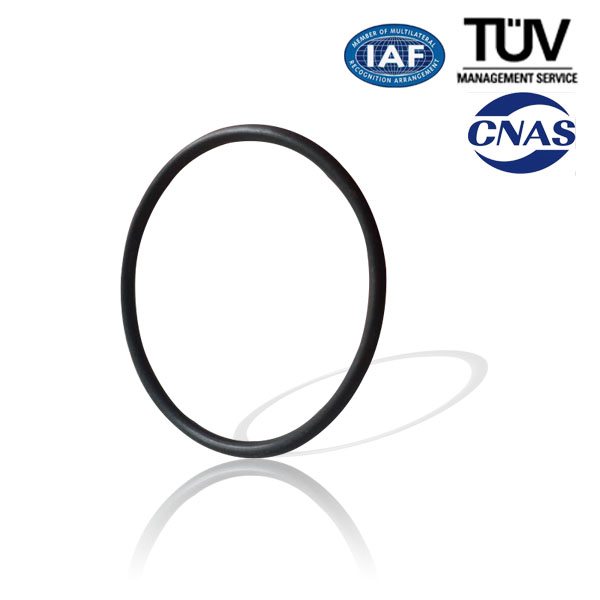
Wholesale Price China NBR O-Ring for Chile Factories Detail:
Nitrile rubber (NBR, Buna-N) provides excellent resistance to petroleum oils as well as mineral and vegetable oil. Nitrile rubber also offers strong resistance to heat aging – often a key advantage over natural rubber.
Technical Data Sheet
| Color | Black or Color |
| Material | Nitrile(NBR) |
| Hardness(Shore A) | 65~75 |
| Temperature(℃) | -30~+120 |
| Tensile Strength(Mpa) | 14 |
| Elongation at Break(%) | 384 |
| Density(g/cm3) | 1.2 |
Application Area
Nitrile rubber performs well in carburetor and fuel pump diaphragms, aircraft hoses, seals and gaskets as well as oil-lined tubing. Due to its versatility, nitrile is used in applications involving not only oil and fuel resistance, but those applications requiring resistance to heat, abrasion, water, and gas permeability.
Product detail pictures:
Related Product Guide:
Comparison of O-Ring Materials
Useful Tips For Installing The Teflon Envelope Gasket
Wholesale Price China NBR O-Ring for Chile Factories, The product will supply to all over the world, such as: , , ,
Seal King security labels – Total transfer
https://viperperformance.co.uk Viper Performance AN Flare Plug, ORB Slimline Plug and NPT (male) Plug technical demonstration video
To find out more about the AN Flare Plug visit: https://www.viperperformance.co.uk/fuel-hose-fittings-and-separators_10001_plugan-flare-plugs.html
To find out more about the ORB Slimline Plug visit: https://www.viperperformance.co.uk/fuel-hose-fittings-and-separators_10110_plugorb-slimline.html
To find out more about the NPT (male) Plug visit: https://www.viperperformance.co.uk/fuel-hose-fittings-and-separators_10002_plugnpt-male-plugs.html
 By from -
By from -
By from -