Customized Supplier for PTFE Graphite Packing with Aramid Corner Supply to Honduras
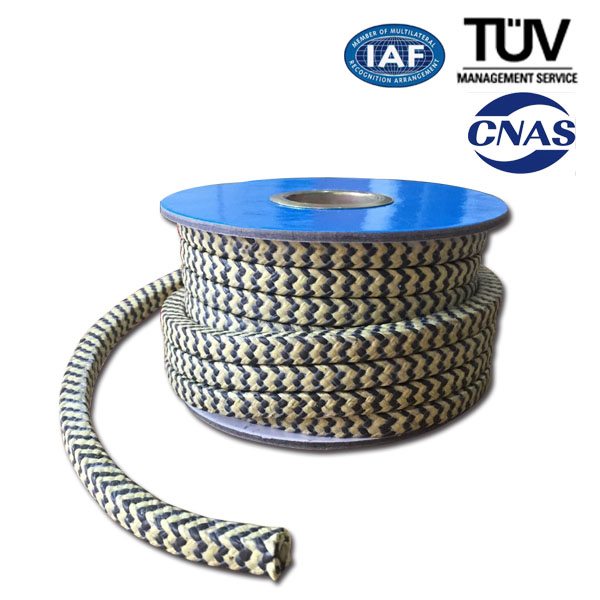
Customized Supplier for PTFE Graphite Packing with Aramid Corner Supply to Honduras Detail:
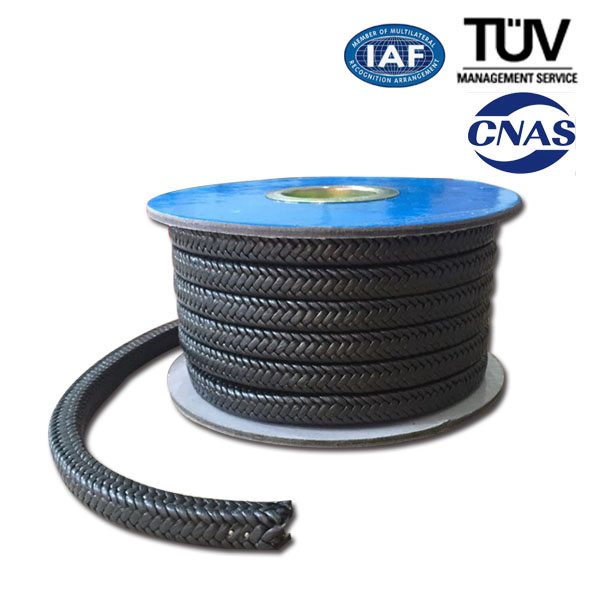
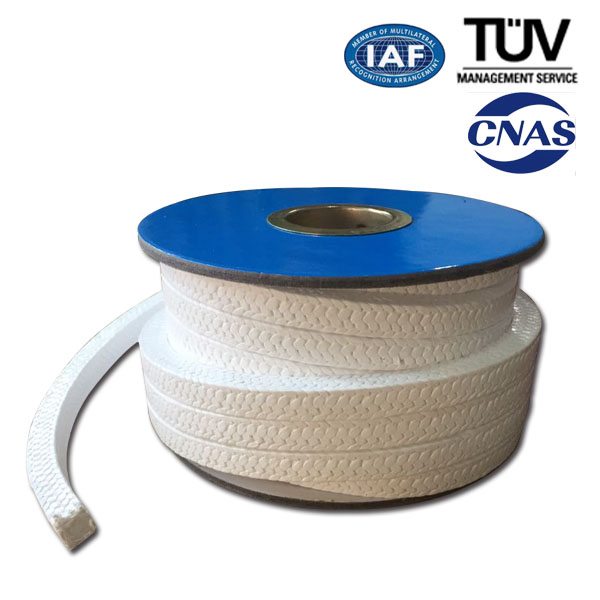
PTFE graphite packing with aramid corner is made from aramid yarns impregnated with PTFE, while the friction faces are made of graphite PTFE yarns. The graphite particle in PTFE yarn enhances the heat exchange efficiency.
Technical Data Sheet
|
|
Rotating |
Reciprocating |
Valves |
|
Pressure |
4Mpa |
15Mpa |
25Mpa |
|
Shaft Speed |
20m/s rotary |
||
|
Temperature |
-200℃~+280℃ |
||
|
PH Range |
2~12 |
||
Application Area
It affords longer service life under severe conditions which conventional asbestos packing can bot provide satisfaction, such as mine, tin ore, paper pulp, feed water pump of power stations, etc.
Product detail pictures:
Related Product Guide:
A Look at the Molded Gasket
Useful Tips For Installing The Teflon Envelope Gasket
Customized Supplier for PTFE Graphite Packing with Aramid Corner Supply to Honduras, The product will supply to all over the world, such as: , , ,
Fully automatic toothpaste filling sealing cartoning sleeve wrapping line tube filler sealer cartoner wrapper equipment
Ointment cream lotion paste tubes filling sealing high speed equipment filler sealer machinery
Model YX-FS60-II
Voltage 220V/380v/50Hz/60Hz
Productivity 80-100pcs/min
Filling volumE 3-250 ml(customized)
Tube diameteR 11-38mm(customized)
Tube length 50-200mm(customized)
Max power 7.5KW
Water consumption 3-6L/min
Machine weight About 1300kg
Dimension(L*W*H) 2950×1300×1800mm
soap carton perfume box folding cartoning packing machine fully automatic small boxes gluing cartoner equipment
model YX-CP100
Encasing speed 30-120 case/min
Box Quality requirement 250-350g/m*m
Dimension range (L× W× H) (50-180)mm* (30-85)mm* (15-50)mm
Leaflet
Quality requirement 50-65g/m²
Unfolded leaflet specification L× W (80-300)mm*(70-210)mm
Folded leafilet specification(1-4)*(L× W) (70-210)mm*(20-40)mm
Compressed air Working pressure 0.5-0.7mpa
Air consumption 120-160L/min
Power supply 220V 50HZ
Motor power 1.5kw
Machine dimension(L× W× H) 3200mm* 1200mm* 1900mm
Machine weight 1500kg
sleeve sealing shrink packaging machinery fully automatic for bottles cans jars boxes Sleeve type thermal PE film packing equipment
model YX-SP6540
Sealing type sleeve sealing
Power supply 380V/50-60Hz/3phase
Max product size 420(L)*300(W)*320(H)mm
Max Packing capacity 20 packs per minute
Film type polyethylene (PE) film
Max film size 630 (width) *280mm(outer diameter)
Power consumption 20.5kW
Tunnel oven size 1800mm(L), entrance 600(W)*400(H)mm
Tunnel conveyor speed 15m/min
Tunnel conveyor chains with rotating silicon coated rods
Working height 800-850mm
Air pressure ≤0.5MPa(5 bar)
P L C SIEMENS S7
Sealing system permanently heated seal bar coated with Teflon
Operating interface Eview displayer
Weight 1050kg
Our Factory since 1992 has been manufacturing the cosmetic&food making and packaging machinery.In these field we have the experience rich enough to solve the questions encountered by our customers from both home and abroad.
For more information about penglai packaging, please visit our website at https://penglaipacking.com
SHENZHEN PENGLAI INDUSTRIAL CORPORATION LIMITED
Contact:Michael Peng Skype: penglaichina Email: penglaipacking@gmail.com whatsapp:+86-15012795261
Spark Gap RU-69 for aviation engine ignition systems sales@dmphotonics.com
Triggered Spark Gaps sales@dmphotonics.com
https://www.dmphotonics.com/Plasma/Triggered%20Spark%20Gap%20Switches.htm
The first blasting cap or detonator was demonstrated in 1745, when a Dr. Watson of the Royal Society showed that the electric spark of a Leyden jar could ignite black powder.
In 1750, Benjamin Franklin in Philadelphia made a commercial blasting cap consisting of a paper tube full of black powder, with wires leading in both sides and wadding sealing up the ends. The two wires came close but did not touch, so a large electric spark discharge between the two wires would fire the cap.
In 1822 the first hot wire detonator was produced by Dr Robert Hare. Using one strand separated out of a multistrand wire as the hot bridgewire, this blasting cap ignited a pyrotechnic mixture (believed to be potassium chlorate/arsenic/sulphur) and then a charge of tamped black powder.
In 1863 Alfred Nobel introduced the first pyrotechnic fuse blasting cap, using mercury fulminate to detonate nitroglycerin.
In 1868, H. Julius Smith introduced a cap that combined a spark gap ignitor and mercury fulminate, the first electric cap able to detonate dynamite.
A detonator is a device used to trigger an explosive device. Detonators can be chemically, mechanically, or electrically initiated, the latter two being the most common.
The commercial use of explosives uses electrical detonators or the capped fuse which is a length of safety fuse to which an ordinary detonator has been crimped. Many detonators’ primary explosive is a material called ASA compound. This compound is formed from lead azide, lead styphnate and aluminium and is pressed into place above the base charge, usually TNT or tetryl in military detonators and PETN in commercial detonators.
Other materials such as DDNP (diazo dinitro phenol) are also used as the primary charge to reduce the amount of lead emitted into the atmosphere by mining and quarrying operations. Old detonators used mercury fulminate as the primary, and it was often mixed with potassium chlorate to yield better performance.
Electrical detonators[edit source
There are three categories of electrical detonators: instantaneous electrical detonators (IED), short period delay detonators (SPD) and long period delay detonators (LPD). SPDs are measured in milliseconds and LPDs are measured in seconds.
In situations where nanosecond accuracy is required, specifically in the implosion charges in nuclear weapons, exploding-bridgewire detonators are employed. The initial shock wave is created by vaporizing a length of a thin wire by an electric discharge.
A new development is a slapper detonator, which uses thin plates accelerated by an electrically exploded wire or foil to deliver the initial shock. It is in use in some modern weapon systems. A variant of this concept is used in mining operations, when the foil is exploded by a laser pulse delivered to the foil by optical fiber.
Electric detonators
Magnetic couplings
Blasting cap
Dead man’s trigger
Detonation
Detonating cord
Detonator (railway)
Exploding-bridgewire detonator
Explosive booster
Explosive material
Firing pin
Fuse (explosives)
NASA standard detonator
Nuclear weapon design
Pencil detonator
Shock tube detonator
Slapper detonator
Triggering sequence
Urchin (detonator)
triggered spark gap ratings
electrostatic analysis of triggered spark gaps
perkin elmer spark gaps
arcing in air
spark gap tube
jacobs ladder high voltage
purpose of spark gap
spark gap voltage
BAE Systems
Battelle Memorial Institute
Czech Technical University
Eglin AFB
Florida A&M University
Johns Hopkins University, Applied Physics Laboratory
Lawrence Livermore National Laboratory
Los Alamos National Laboratory
Loughborough University
NASA Marshall Space Flight Center
Sandia National Laboratories
Science University of Tokyo
University of Bologna (Italy)
University of California
University of Ferrara (Italy)
Manchester University
University of Southern California
University of Western Australia
US Army Research Laboratory
US Naval Research Laboratory
 By from -